Across infrastructure providers and market compliances, SPICE helps teams reduce the false positives and make faster, governed, agentic decisions they can stand behind.

Compliance teams need to monitor large volumes of unstructured information and identify issues that could affect their regulatory obligations. Documents arrive continuously across multiple systems and reviewing them manually is slow and difficult to scale. Teams also need to demonstrate what was reviewed, what was identified and how each issue was handled.
SPICE provides a secure compliance workflow platform for industries that rely on unstructured data. It ingests PDFs and other documents in real time by connecting to the systems where information becomes available. Agents extract and structure the relevant information before applying compliance rules and raising findings for review.
SPICE manages the process from document ingestion through to review and resolution. Every finding retains its source information and decision history. Compliance teams remain in control through human review and workflow-based approval.

The Malaysian stock exchange processes thousands of company announcements and regulatory filings on a regular basis. These documents contain critical information that compliance teams need to monitor. Reviewing large volumes of unstructured documents manually is resource intensive, particularly when compliance teams need to respond quickly.
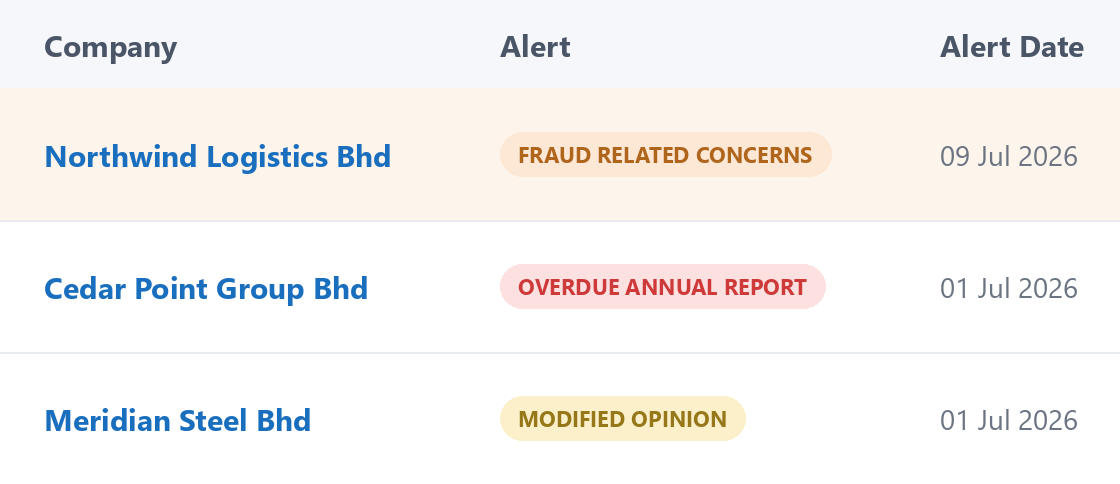
SPICE connects directly to the stock exchange's source of company announcements and ingests new documents as they become available. Agents extract relevant information from each document and convert it into structured data.
This structured data is then used to power compliance alerts, support automated investigation and provide analytics across the full body of company announcements. Compliance teams can quickly identify issues that require attention and investigate them without manually searching through large volumes of documents.
Findings are routed through controlled workflows for review and resolution. Every finding retains its connection to the original announcement and the information used to generate it. This provides a clear chain of provenance from the source document through to the compliance action.


Organisations hold valuable information across large databases and other data sources. Finding answers often requires specialist knowledge of the underlying systems and data structures. This makes complex enquiries and investigations slow and difficult for operational teams to perform themselves.
SPICE provides a governed platform for deploying AI agents that can work directly with an organisation's data. Users can ask questions or describe a task in plain language and the agent determines how to find the answer or complete the work.
Agents can query and traverse complex databases and combine information from multiple sources. They can investigate anomalies and answer ad hoc questions or carry out repeatable tasks. Domain knowledge and system knowledge are captured as reusable skills so agents can work effectively within a specific operational environment.
The same platform can support very different use cases. This includes helping maintenance teams investigate rail assets and helping telecommunications teams understand transmission tower usage and anomalies.

The eflow PATH platform supports trading firms and other financial institutions in meeting their trade compliance obligations. Compliance analysts need to investigate large volumes of trading activity and alerts. Investigations can require analysis across large and complex datasets which makes it difficult for analysts to quickly establish what happened.
This creates a significant manual workload. Analysts can spend substantial time investigating alerts that ultimately prove to be false positives.
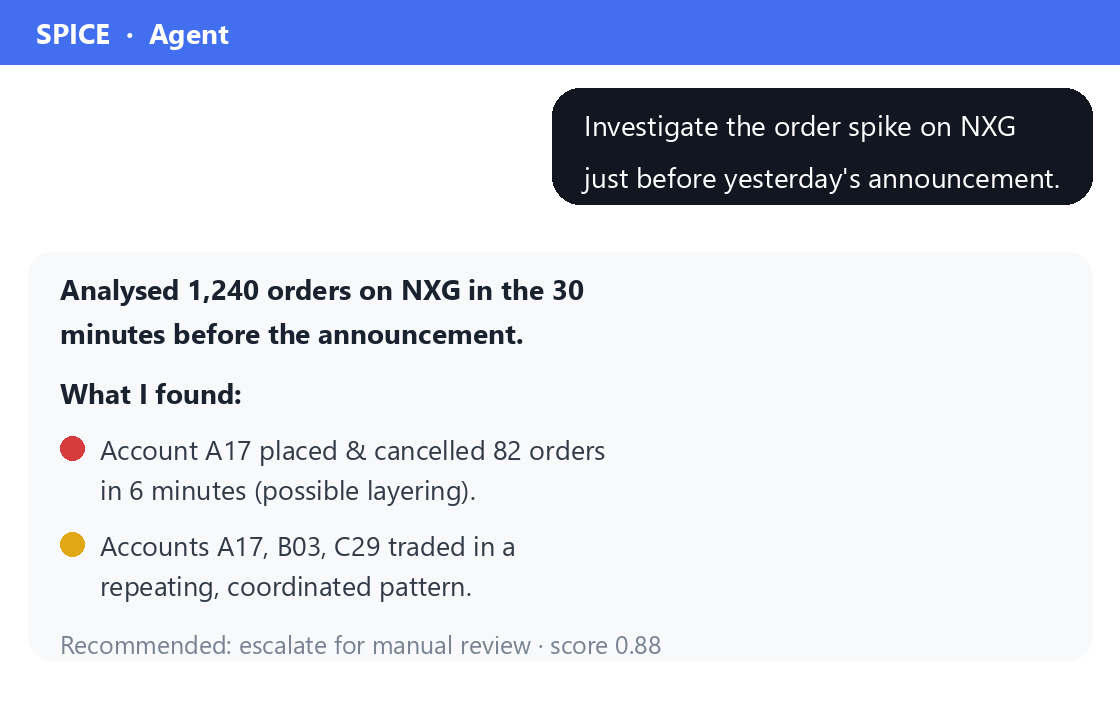
DHI provides eflow with an agentic capability that allows compliance analysts to investigate trading activity using natural language. Analysts can ask questions about trading behaviour and the agent investigates the underlying data to find the relevant information.
The agent can query and traverse complex trading databases to investigate patterns and relationships that may not be immediately apparent. It can also investigate individual trading alerts and help analysts determine whether the activity warrants further attention.
This gives analysts a flexible way to perform ad hoc investigations without manually constructing database queries. The same capability can also support repeatable investigation workflows and other compliance tasks.
The capability saves compliance analysts significant time by either supporting investigation through ad hoc database queries or by helping analysts to rapidly deprioritise false positives.


Many operational processes require people to gather information from multiple sources and apply judgement before an outcome can be produced. These tasks can be difficult to scale when they involve large datasets, qualitative information or uncertain evidence.
SPICE combines structured data, database agents and qualitative information to automate complex operational tasks. Governed agents can investigate information, apply defined rules and produce outcomes while keeping people in control of the process.
This enables organisations to automate repeatable tasks such as assessing risk, generating asset health indexes or processing low-risk exceptions. AI can handle the scale and complexity of the underlying information while rules and human oversight ensure that automated outcomes remain controlled and defensible.

DT Infrastructure holds vast amounts of structured data relating to its rail assets and their operational history. The challenge was turning this data into information that could support better asset management and maintenance decisions across a large network.
Analysing individual assets in detail can require significant human effort. Applying the same level of analysis across a large asset base would be impractical using manual processes alone.
SPICE brought together the available asset information to create a foundation for analytics and more informed decision making. The data could be analysed across individual assets as well as across areas and groups of related assets.
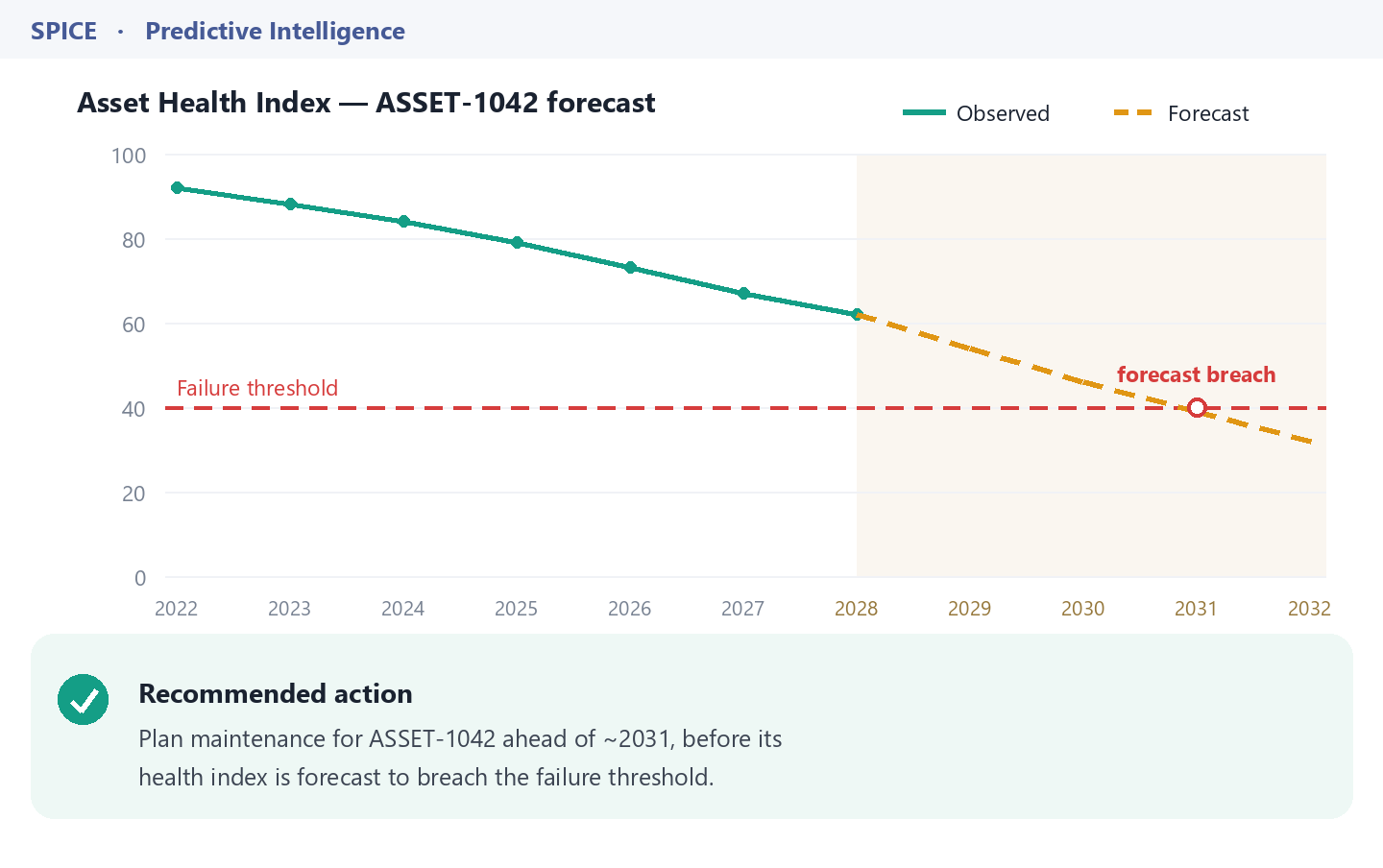
This also unlocked the ability to use AI agents to investigate the underlying asset data at scale. Agents can traverse the asset database and examine the history and characteristics of individual assets to support detailed health assessments.
The approach provides a pathway to generating detailed Asset Health Index information across a large asset base. This would otherwise require an impractical amount of manual analysis.
The same data foundation can also support the identification of patterns across assets and provide maintenance teams with a more targeted view of where further investigation or intervention may be required.

Tell us the decision your team owns. We'll configure a SPICE demo around it, governed, explainable and ready for scrutiny.